There is a very important reason for delaying film development. Tripping a shutter is somewhat easy; choosing a single strong image out of hundreds is not. Self-editing is one of the most difficult aspects of photography. Subjectivity is the bane of that difficulty. Separating strong compositions from the weaker ones is a substantially harder task than making the image in the first place. The more time that passes between taking a photo and comparing it against others increases one’s objectivity. When editing my work, it is my hope and aim that I do not recall having ever taken the particular photograph that I’m appraising.
I would like to point out that this is the opposite approach from those who check the back of their digital camera to inspect each image. The idea of reviewing images on the spot, strikes me as moot. If the image did not come out well and can be redone, then the image was not decisive. You cannot be fully present or “in the zone” when your nose is pointing to the last image. That style is completely antithetical to my ethos.
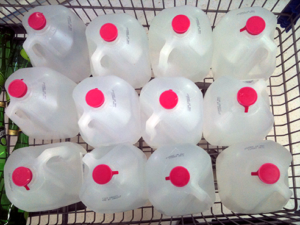
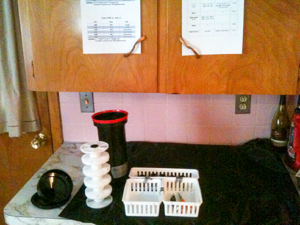
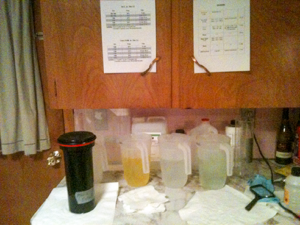
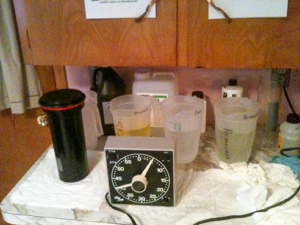
In the furtherance of objectivity, I like to develop in batches of at least thirty rolls at a time. For me, the best time to develop film is when there will be the fewest possible interruptions. Being snowed in is my favorite such time. The process begins with the procurement of all the necessary ingredients, including a sufficient amount of distilled water.
Developing film is quite a tedious chore, to put it nicely. Not only is it labor and time intensive, it is very exacting work with absolutely no room for error. The water temperature needs to be just right, the chemicals need to be precisely proportioned to the milliliter, and the agitation regimen must conform to the water temperature fastidiously.
Just one little mistake or oversight will ruin the film, irreparably. Once the process begins, it cannot be stopped or paused. Each second of the procedure is carefully accounted for. Once the developing bath hits the film, there is no turning back. You get one shot to get it right, or you lose the image; possibly the image of a lifetime.
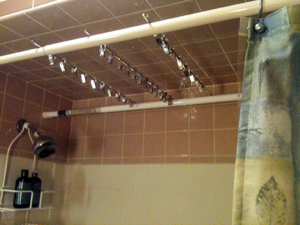
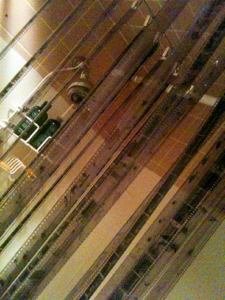
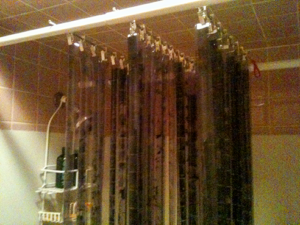
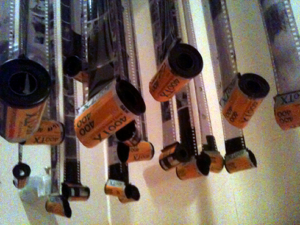
After about an hour and a half of painstaking manipulation, when the reels of film have completed their final wash, and the images come into the light for the first time, the feeling is both excitement and dread. Inside “Schrödinger’s developing tank,” exists either an artistic vision or shards thereof. I hold my breath each time the first soapy reel comes out of the tank. Indeed, the chore is so tedious and tense that I reserve the thrill of this tension for as infrequently as possible.